
As manufacturers increase automation in metal fabrication, electrical equipment production, and appliance assembly, fastener selection has become an important factor in improving installation consistency and reducing production defects. DIN7982 Self Tapping Screws are a common search term for buyers looking for countersunk self-tapping fasteners, while Torx Self Tapping Screws are attracting attention in applications where stable tool engagement and controlled torque transfer are important. Choosing between Torx and Phillips drives requires more than comparing their shapes. Engineers must also consider substrate material, screw geometry, installation torque, automatic feeding, and the required connection quality.
In automated screwdriving, the drive recess determines how the driver bit engages with the screw head and transfers rotational force. Poor engagement can cause bit slippage, damaged recesses, inconsistent seating, and production interruptions. These problems become more significant when a production line installs large quantities of fasteners at a fixed cycle time.
Torx drives use a six-lobed geometry that can provide effective torque transmission and improved resistance to cam-out when the correct bit is fully engaged. Phillips drives remain widely used because of their established tooling availability and compatibility with conventional assembly processes. Neither drive guarantees defect-free fastening on its own. Bit wear, angular misalignment, excessive torque, and inconsistent component positioning can affect both systems.
For manufacturers evaluating DIN7982 Self Tapping Screws or alternative drive configurations, the key question is whether the screw, driver, and assembly process work together to achieve repeatable installation without damaging the fastener or the base material.
Torx Self Tapping Screws are often a practical choice for applications that require reliable engagement during powered installation. Their drive geometry distributes contact across multiple surfaces, helping the driver transmit torque with reduced cam-out under suitable operating conditions. This can be beneficial when automated equipment must maintain consistent fastening results across repeated cycles.
Phillips drives can also perform effectively when the driver bit, screw recess, and installation parameters are properly matched. However, excessive torque or poor alignment can cause the bit to climb out of the recess, potentially damaging the screw head and interrupting assembly.
For both drive types, torque settings should be validated through installation trials. The appropriate setting depends on screw diameter, thread geometry, substrate hardness, pilot-hole size, and the required seating condition. A higher torque capacity does not automatically mean a stronger or more reliable joint.
Automatic screwdriving systems depend on repeatable positioning between the driver bit and the fastener. Torx drives can provide stable engagement when the bit is correctly sized and aligned, helping reduce recess damage during repeated fastening. Phillips drives may be suitable for established production lines that already use compatible tooling and validated installation procedures.
However, drive geometry is only one part of automation performance. Screw feeding, pickup accuracy, driver stroke, rotational speed, and axial force also influence cycle consistency. A screw that performs well during manual installation may require additional validation before being introduced into an automatic feeder or robotic fastening system.
Manufacturers should therefore assess complete assembly performance rather than selecting a drive type based on its appearance alone.
The cutting point is another important consideration when selecting self-tapping screws for industrial applications. Its geometry influences how the screw enters the workpiece, initiates engagement, and forms or cuts the mating thread in the substrate. A suitable point design can help improve installation consistency, but its effectiveness depends on the material being fastened and the preparation of the receiving hole.
For sheet metal, engineers should consider material thickness, hardness, screw diameter, and the required thread engagement. For hard plastics, pilot-hole dimensions and material characteristics are especially important because unsuitable installation conditions can cause cracking, deformation, or inadequate retention. The correct pilot-hole size must be established from applicable specifications or validated tests rather than assumed to be identical for every material.
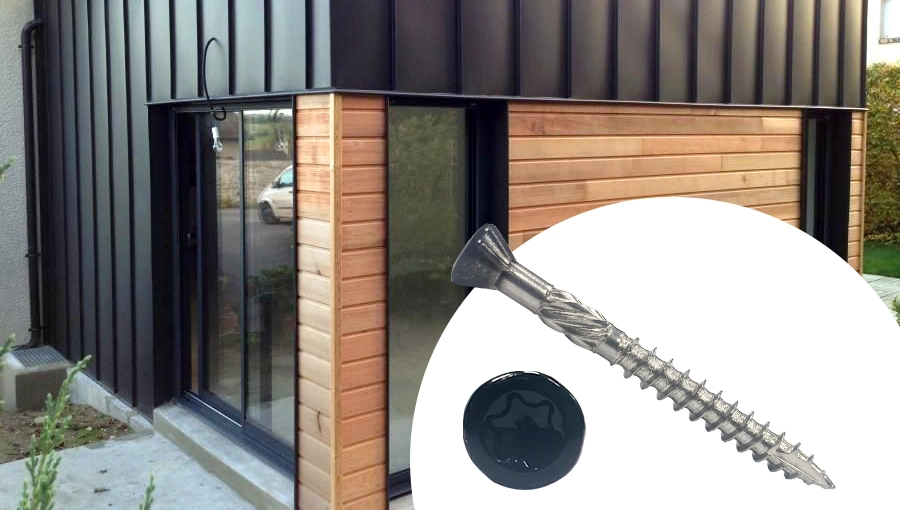
Tuyue's coated head tapping screw product combines a cutting point with a Torx drive and stainless steel construction. These features make it relevant for evaluating fastening requirements in applications such as control panels, outdoor lighting fixtures, shed frames, and appliance interiors. Actual suitability should be confirmed against the screw dimensions, substrate specifications, and installation requirements.
Material and surface treatment affect fastener durability, appearance, and performance in different environments. Stainless steel is often selected for its corrosion resistance, but the actual resistance depends on the stainless steel grade, exposure conditions, and contact with other materials. A coated finish may provide additional surface protection or a specified appearance, but the coating type and compatibility with the substrate should be verified.
For outdoor equipment and electrical enclosures, buyers should consider humidity, rain exposure, temperature changes, and potential contact with dissimilar metals. They should also check whether the coating affects friction during installation, as changes in friction can influence the relationship between applied torque and clamping force.
In automated production, consistent surface treatment is important because variations in friction may affect fastening repeatability. Buyers should request clear material and finish specifications and, where corrosion resistance is critical, relevant test data. Stainless steel construction and a colored coating should not be treated as an automatic guarantee of suitability for every outdoor or corrosive environment.
Not necessarily. DIN 7982 traditionally specifies countersunk self-tapping screws with a cross recess, while Torx is a different drive configuration. Buyers searching for DIN7982 Self Tapping Screws should distinguish the required standard, head geometry, drive type, and material rather than treating these characteristics as interchangeable.
When replacing a Phillips-drive screw with a Torx alternative, engineers should confirm head dimensions, screw diameter, length, thread design, point geometry, and driver compatibility. The receiving countersink or mounting surface must also match the head geometry to achieve the intended seating position. DIN 7982 and ISO 7050 may differ in certain dimensional details, so direct interchangeability should be checked against the applicable drawings and specifications.
Before approving a new fastener for automated production, manufacturers should conduct sample trials to evaluate feeding reliability, driver engagement, installation torque, seating depth, thread formation, and joint retention. These checks help identify issues before the fastener is introduced into full-scale production.
When sourcing Torx Self Tapping Screws for industrial applications, buyers should begin by defining the required screw dimensions and the properties of the receiving material. Diameter, length, head configuration, drive size, point design, stainless steel grade, and surface finish should be clearly specified. For automated assembly, the selected fastener must also be compatible with the driver bit, feeding mechanism, and installation parameters.
Sample testing is particularly useful when a fastener will replace an existing Phillips-drive design or be introduced into a new production line. Buyers should evaluate not only whether the screw can be installed, but also whether the process delivers consistent results over repeated cycles. Relevant acceptance criteria may include recess integrity, seating position, thread engagement, joint retention, and surface-finish consistency.
As a fastener supplier, Zhejiang Jiaxing Tuyue Import And Export Co., Ltd. presents a range of industrial fastening products, including its coated head tapping screw with Torx drive, stainless steel construction, and cutting point. Buyers can consult the company's product information and contact its team to confirm available specifications, material options, finish requirements, and sample arrangements for their applications.